Strategies for Optimising Industrial Racking Efficiency in 2026
As industries evolve, the need for optimised storage solutions becomes increasingly critical. In 2026, organisations are expected to embrace innovative strategies to enhance the efficiency of their industrial racking systems. These strategies not only improve space utilisation but also streamline operations and reduce costs. This article explores effective methods for achieving optimal racking efficiency in modern warehouses.
Utilising Advanced Warehouse Management Systems
Implementing advanced warehouse management systems (WMS) is crucial for optimising racking efficiency. These systems utilise real-time data analytics to monitor inventory levels, track movements, and optimise picking routes. By integrating artificial intelligence and machine learning, warehouses can predict demand fluctuations and adjust racking configurations accordingly. This dynamic approach ensures that products are stored in the most accessible locations, significantly reducing retrieval times.
Implementing Automated Storage and Retrieval Systems
The adoption of automated storage and retrieval systems (ASRS) offers a significant advantage in enhancing racking efficiency. These systems utilise robotics to handle the storage and retrieval of goods, thereby minimising human error and maximising space. ASRS can be tailored to fit various racking designs, enabling warehouses to optimise vertical space while ensuring that products are easily accessible. In 2026, the integration of such technology will become commonplace, providing organisations with a competitive edge.
People Also Look For:
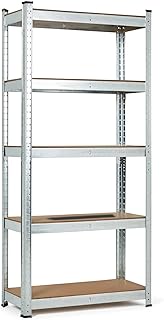
- ZENO Garage Shelving - 5 Tier | Heavy Duty Warehouse Racking Shelves | Metal Shelving Units | Industrial Racking | Holds 175KG Per...
- ZENO Garage Shelving - 5 Tier | Heavy Duty Warehouse Racking Shelves | Metal Shelving Units | Industrial Racking | Holds 175KG Per...
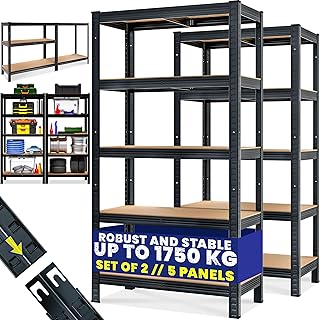
- Monzana® Set of 2 Garage Shelving Units | 5 Tier Industrial Racking | Heavy Duty Free Standing Plug-In Shelves | Warehouse | Shed...
Optimising Racking Layouts
Designing an effective racking layout is essential for maximising efficiency. In 2026, organisations will increasingly adopt flexible racking systems that can be easily reconfigured to accommodate changing inventory needs. This adaptability allows warehouses to respond swiftly to market demands. Implementing a layout that minimises travel time while maximising storage capacity is vital. Techniques such as slotting optimisation can help in determining the best locations for high-velocity items, ensuring that they are easily accessible to pickers.
Incorporating Lean Principles
Incorporating lean principles into warehouse operations is a proven method for enhancing efficiency. By eliminating waste and streamlining processes, organisations can maximise the use of their racking systems. In 2026, warehouses will benefit from continuous improvement practices, where teams regularly assess and refine their racking operations. Techniques such as value stream mapping can help identify bottlenecks and areas for improvement, ensuring that every aspect of the racking system contributes to overall efficiency.
Investing in Employee Training
Employee training plays a critical role in optimising racking efficiency. In 2026, organisations will recognise the importance of equipping their workforce with the necessary skills to handle advanced racking systems and technologies. Regular training sessions can help employees become proficient in using new equipment, understanding inventory management software, and adhering to safety protocols. A well-trained workforce is essential for ensuring that racking systems are utilised to their fullest potential.
Leveraging Data Analytics
Data analytics will continue to transform the way organisations approach racking efficiency in 2026. By analysing historical data and trends, warehouses can make informed decisions regarding inventory management and racking configurations. Predictive analytics can forecast inventory needs, enabling organisations to optimise their racking systems for peak times. Additionally, real-time data monitoring can highlight inefficiencies in racking operations, allowing for prompt corrective actions.
Enhancing Safety Measures
As organisations focus on optimising racking efficiency, safety must remain a top priority. In 2026, the implementation of advanced safety measures will be crucial in preventing accidents and injuries associated with racking systems. This includes regular inspections, proper training on equipment usage, and adherence to safety regulations. By fostering a culture of safety, organisations can ensure that their racking systems are not only efficient but also secure for all employees.